
Engineered wood vs LVT is the flooring question we are asked about most in Liverpool homes, usually by someone standing in a hallway or kitchen with two sample boards in their hands. Both look like timber, both can go over underfloor heating and both cost less than solid oak. Underneath, they are very different floors. Engineered wood is real timber on a stable plywood or softwood core. LVT, or luxury vinyl tile, is a printed photograph of wood protected by a clear wear layer. This guide compares the two on looks, water resistance, durability, comfort, underfloor heating, cost in 2026 and installation, so you can choose the right floor for each room rather than one floor for the whole house.
Engineered Wood vs LVT: The Short Answer
If you want the warmth, grain and long-term value of real timber in living rooms, bedrooms and hallways, choose engineered wood. If the floor will see water, muddy dogs, toddlers or tenants, or it is going into a kitchen, utility room or bathroom, LVT is usually the safer choice.
Many of the homes we work on in Liverpool end up with both: engineered oak through the lounge and hallway, and a matching LVT in the kitchen and downstairs toilet. Done well, with the same tone and plank width and a neat threshold, the change is barely noticeable.
What Engineered Wood Actually Is
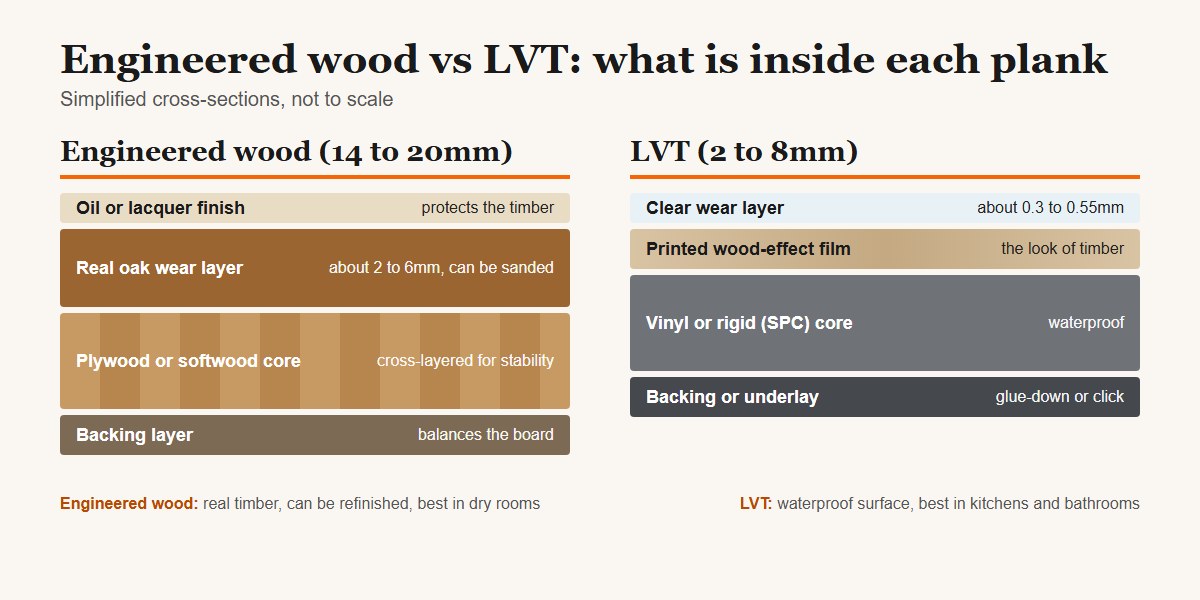
Engineered wood flooring is made in layers. The top layer, called the wear layer or lamella, is real hardwood, usually oak, between about 2mm and 6mm thick. Under it sits a core of plywood or softwood strips laid in alternating directions, which stops the board from swelling and shrinking as much as solid wood does when the humidity changes.
Because the surface is real timber, every plank has its own grain, knots and colour variation. It is finished with oil or lacquer, and a board with a thick enough wear layer can be sanded and refinished once or more over its life, which is why engineered wood can last for decades.
What LVT Actually Is
LVT stands for luxury vinyl tile. It is a layered vinyl product with a high-resolution printed image of wood or stone, a clear protective wear layer on top and, on better products, an embossed texture that follows the printed grain. It comes in two main types:
- Glue-down LVT, the type made popular by brands such as Amtico and Karndean, is thin (often 2 to 3mm), flexible and bonded to a perfectly smooth subfloor. It gives the most realistic finish and allows patterns such as herringbone and borders.
- Click or rigid-core LVT (often sold as SPC or rigid core) is thicker, with a stiff stone-plastic core and a click-lock joint. It floats over an underlay and is quicker to fit, but it can sound hollower underfoot.
The wear layer on domestic LVT is usually around 0.3mm to 0.55mm. It is tough, but once it is worn through, the print underneath cannot be repaired, only the plank replaced.
Engineered Wood vs LVT: Side-by-Side Comparison
| Feature | Engineered wood | LVT |
|---|---|---|
| Surface | Real hardwood (often oak) | Printed vinyl with clear wear layer |
| Water resistance | Copes with spills wiped up quickly; not for bathrooms | Surface is waterproof; suits kitchens and bathrooms |
| Scratch resistance | Lower; marks show on soft finishes | Higher; good for pets and busy homes |
| Can it be refinished? | Yes, sanded once or more if the wear layer allows | No; damaged planks are replaced |
| Feel underfoot | Warm, solid, natural | Slightly softer and warmer than tile; can feel less solid |
| Underfloor heating | Yes, with the right board and temperature limits | Yes, often with a slightly faster response |
| Typical lifespan | 25 to 40+ years | 10 to 25 years |
| Typical supply cost (2026) | Around £35 to £100+ per m² | Around £20 to £60+ per m² |
The figures above are typical ranges we see across Merseyside in 2026. Your own price depends on the product, the size and shape of the room and, most of all, the condition of the floor underneath.
Engineered Wood vs LVT: Looks and Feel
Real timber has depth that a print cannot fully copy. In good light, engineered oak shows a slight shimmer in the grain and natural variation from board to board. The best LVT gets very close, especially with an embossed-in-register texture, but look along a large room at a low angle and the repeat in the pattern can give it away.
Underfoot, engineered wood feels firm and solid, and it sounds like a timber floor. Glue-down LVT feels slightly softer and quieter. Rigid-core click LVT can sound a little hollow unless it is laid on a good acoustic underlay, which matters in flats and upstairs rooms.
For period properties in areas such as Mossley Hill, Wavertree and the Georgian Quarter, engineered wood often suits the character of the house better. In a modern open-plan kitchen-diner, a good LVT can look just as smart and will cope better with daily life.
Water, Kitchens and Bathrooms
This is the biggest practical difference in the engineered wood vs LVT decision. The surface of LVT is waterproof, so spilled water, a dripping dishwasher or wet feet out of the shower will not harm it, provided the water does not get under the floor at the edges. That makes it our usual recommendation for kitchens, utility rooms, cloakrooms and bathrooms.
Engineered wood is more stable than solid wood, but it is still timber. Spills wiped up quickly are fine. Standing water, a slow leak or constant splashing will mark the finish and can make the boards swell or lift. We do fit engineered wood in kitchens for clients who love the look and accept the risk, using a hard-wearing lacquer and sealing the edges carefully, but we do not recommend it for bathrooms or wet rooms. If you are weighing up bathroom floors, our guide to vinyl, LVT or tiles for a bathroom floor goes into more detail.
Durability, Scratches and Pets
A good LVT shrugs off most everyday wear. Dog claws, dropped toys and dining chairs dragged across the floor are far less likely to mark it than an oiled oak floor. That is why landlords and families with large dogs often choose LVT for hallways and kitchens.
Engineered wood will pick up small dents and scratches over time, especially with a matt oil finish. Many people like the way a timber floor ages, and minor marks can be blended in with a maintenance oil. Deeper damage on a board with a thick wear layer can be sanded out, which is something LVT cannot offer. If a heavy pan gouges an LVT plank, the plank has to be cut out and replaced, so always keep a few spare planks from the same batch.
Engineered Wood vs LVT With Underfloor Heating
Both floors can be used with underfloor heating, and both are better than solid wood for it. The key points are:
- Engineered wood: choose a board the manufacturer approves for underfloor heating, usually 14 to 20mm thick with a thinner wear layer. Most manufacturers limit the floor surface temperature to around 27°C. Wood is a mild insulator, so the room takes a little longer to warm up.
- LVT: thin glue-down LVT conducts heat well and responds quickly. It also usually has a surface temperature limit of around 27°C. Use an adhesive rated for heated floors.
With either floor, the heating must be commissioned and run before fitting, then turned down while the floor is laid and brought back up slowly afterwards. Skipping this step is one of the most common reasons we see gaps opening in timber floors in the first winter. We cover running costs and system types in our underfloor heating cost guide.
Engineered Wood vs LVT Cost in Liverpool (2026)
As a rough guide for 2026, before any subfloor work:
- LVT supply: around £20 to £35 per m² for budget click LVT, £35 to £60+ per m² for premium glue-down ranges.
- LVT fitting: around £15 to £30 per m², plus smoothing compound or plywood where the subfloor needs it. Glue-down patterns such as herringbone cost more to lay.
- Engineered wood supply: around £35 to £60 per m² for a good everyday oak, £60 to £100+ per m² for wider planks, thicker wear layers and herringbone blocks.
- Engineered wood fitting: around £20 to £40 per m², more for herringbone, glued installations and lots of door frames to undercut.
So for a typical 20m² lounge, LVT might cost around £800 to £1,800 supplied and fitted, while engineered oak might cost around £1,100 to £2,800. Over 20 or 30 years, a well-kept engineered wood floor that can be refinished often works out better value than replacing an LVT floor once it is worn. These are guide prices only; we always quote after seeing the room.
Installation and Subfloor Preparation
The finished floor is only ever as good as what is underneath it. This is true of both floors, but glue-down LVT is the least forgiving. Being thin and flexible, it shows every dip, ridge and nail head in the subfloor. Before laying it, we usually lay a smoothing compound on concrete or overboard timber floors with plywood.
Engineered wood and rigid-core LVT can bridge small dips, but a floor that is out by more than a few millimetres over two metres will still cause bouncing, creaking and open joints. In older Liverpool terraces, we often find uneven joists and old floorboards that need levelling first. Our article on levelling uneven floors before new flooring explains the options.
Moisture matters too. New screeds must be dry enough before either floor goes down, and concrete ground floors in older houses may need a damp-proof membrane. The Contract Flooring Association publishes industry guidance on subfloor moisture and preparation that good fitters follow.
How Long Each Floor Takes to Fit
Engineered wood should be left in the room for 48 to 72 hours before fitting so it can acclimatise. LVT usually needs around 24 hours. A typical lounge takes one to two days to fit in either material once the subfloor is ready. Allow an extra day or two for smoothing compound to dry, or for overboarding with plywood.
Cleaning and Maintenance
Day to day, both floors are easy to look after: vacuum or sweep to remove grit, then clean with a damp, well-wrung mop. Grit is the real enemy of both, so a good doormat at each entrance makes a big difference. The longer-term care is where engineered wood vs LVT differ most.
- LVT: use a pH-neutral cleaner. Avoid steam mops unless the manufacturer allows them, and avoid rubber-backed mats, which can stain some vinyl. There is nothing to re-oil or re-seal, which is why LVT suits busy households and rentals.
- Engineered wood: use a cleaner made for oiled or lacquered wood, never a soaking-wet mop or steam. Oiled floors benefit from a maintenance oil every year or two in busy areas; lacquered floors need less attention but are harder to spot-repair. Felt pads under furniture legs prevent most dents and scratches.
If an engineered wood floor starts to look tired after ten or fifteen years, it can often be lightly sanded and re-oiled to look close to new. An LVT floor at the same age can be deep-cleaned, but a worn wear layer cannot be restored.
Engineered Wood vs LVT for Landlords and Resale
For buy-to-let properties across Liverpool, LVT is usually the practical winner. It copes with heavy use between tenancies, it is waterproof in kitchens and bathrooms, and a damaged plank can be swapped without refinishing a whole room. Choosing a mid-range LVT with a 0.55mm wear layer gives a good balance of cost and lifespan for a rental.
If you are improving a home you plan to sell, engineered wood vs LVT becomes a question of what buyers in your area expect. In family homes and period properties, a real timber floor through the hallway and living areas is a feature estate agents like to mention. In a modern flat or a starter home, a quality LVT throughout looks clean and practical. In both cases, a well-fitted floor with neat edges and thresholds matters more to buyers than the material itself.
Whichever you choose, ask for the product name and batch number and keep the paperwork. It helps with any future repairs and reassures a buyer that the floor was fitted properly.
Engineered Wood vs LVT: Which Rooms Suit Which Floor?
- Lounge and dining room: engineered wood for warmth and character; LVT if you have large dogs or young children.
- Hallway: either. LVT handles wet shoes better; engineered wood gives a better first impression in a period home.
- Kitchen and utility: LVT in most cases.
- Bathroom, ensuite and cloakroom: LVT or porcelain tiles, not engineered wood.
- Bedrooms: engineered wood, with a good underlay for sound.
- Rental property: LVT, for durability and easy repairs between tenants.
If you like a pattern, both floors can be laid in herringbone. Our herringbone guide explains how the layout is set out.
Common Mistakes When Choosing Between Engineered Wood vs LVT
- Choosing from a single small sample. Look at several full-size planks together in your own room, in daylight and under your own lights.
- Skipping subfloor preparation. It is the most common cause of failed floors and the hardest to fix later.
- Using one floor everywhere to save thinking. The best result is often engineered wood in dry rooms and LVT in wet ones.
- Ignoring door heights. New floors raise the level, so doors may need trimming and thresholds need planning.
- Not keeping spares. Keep a few planks or a pack from the same batch for future repairs.
Flooring Fitting in Liverpool With Kew Construction
Kew Construction is a family-run bathroom, tiling and renovation business based in Liverpool, working across Merseyside, including Crosby, Formby, Maghull, Aintree, Bootle and the Wirral. We supply and fit engineered wood, LVT, laminate and porcelain and ceramic tiles, and we prepare the subfloor properly first. Kew Construction holds a verified Google Business Profile in Liverpool, and is reviewed on Checkatrade, MyBuilder and Trustpilot.
Still deciding between engineered wood vs LVT for your home? Call Ariel on 07453273876 or email Info@kewconstruction.com for a free visit and quote. Finished work is on Instagram.
Frequently Asked Questions
Is LVT cheaper than engineered wood?
Usually, yes. In 2026, LVT typically costs around £20 to £60 per m² to buy, compared with around £35 to £100 or more for engineered wood. Fitting costs are similar, but glue-down LVT often needs more subfloor preparation, which narrows the gap.
Which is better for a kitchen, engineered wood or LVT?
LVT is the safer choice for most kitchens because its surface is waterproof and resists scratches. Engineered wood can be used in a kitchen with a hard-wearing lacquer and careful sealing, but spills must be wiped up quickly.
Does LVT add value to a house like engineered wood?
Buyers often see real timber floors as a premium feature, so engineered wood in living areas can help a house stand out. A good-quality LVT in the kitchen and bathroom is also seen as a practical plus. Neither is likely to change a valuation much on its own.
Can you put engineered wood in a bathroom?
We do not recommend it. Bathrooms see standing water and high humidity, which can make engineered boards swell and lift. LVT or porcelain tiles are better choices for bathrooms and ensuites.
How long does LVT last compared with engineered wood?
A good LVT floor typically lasts 10 to 25 years, depending on the wear layer and how busy the room is. Engineered wood with a thick wear layer can last 25 to 40 years or more because it can be sanded and refinished.
Is engineered wood or LVT better with dogs?
LVT is more resistant to scratches from claws and is waterproof, so it usually suits homes with dogs better. If you prefer engineered wood, a hard-wearing lacquered finish shows marks less than a soft oil.
Can both floors go over underfloor heating?
Yes. Both work with underfloor heating when the product is approved for it and the floor surface temperature is kept within the manufacturer’s limit, usually around 27°C.
Which areas does Kew Construction cover?
Kew Construction is based in Liverpool and works across Merseyside, including Crosby, Formby, Maghull, Aintree, Bootle and the Wirral.