
A new bathroom installation in Liverpool begins the moment the first old tile comes off the wall. Everything before that point is planning. What happens next depends on what is hiding underneath, and in Merseyside’s housing stock, the answers vary considerably. Kew Construction handles complete bathroom projects across Liverpool from rip-out to final finish. If you are comparing quotes right now, this article explains why two figures that look similar on paper can end up very different once the work starts.
What a Complete Bathroom Rip-Out Actually Involves
A full bathroom refurbishment is not just swapping the suite. The sequence matters: strip out the old sanitaryware and tiles, assess the substrate, carry out any structural, plumbing or drainage work, first-fix electrics, waterproof and prepare all surfaces, then tile or panel, second-fix plumbing and electrics, fit flooring, and finish with sealants, accessories and a proper clean. Each stage depends on the one before it being correct. Rushing the substrate work to save a day costs weeks later.
The items people do not see on a finished bathroom are the ones that determine whether it lasts. Tile backer board rather than ordinary plasterboard behind the shower, movement joints in tiled floors, silicone (not grout) in internal corners, a correctly tanked wet room floor that falls to the gully before a single tile goes down. Get those right and the bathroom will look the same in ten years. Get them wrong and you will know about it in two.
What Liverpool’s Housing Stock Throws Up Behind the Tiles
This is where a Liverpool bathroom fitter needs local knowledge, not just trade knowledge. The city’s housing stock is not uniform, and neither are the problems that wait behind the old tiles.
Victorian and Edwardian terraces in areas like Toxteth, Wavertree and Kensington typically have suspended timber floors. The bathroom in many of these was not original to the house; it was added in a rear extension at some point in the last century, sometimes over a kitchen, sometimes in a single-skin brick outbuilding that is cold, poorly insulated and prone to condensation. Pull the floor tiles off and you may find the floorboards have been notched to accommodate a soil pipe at an angle that made sense to someone in 1985 but has been sagging ever since. Before any new tiling goes down, a suspended timber floor needs to be overboarded with at least 15mm ply, screwed at 300mm centres, to give a rigid, flat base. Skip that step and the tiles crack. It is not optional.
In 1930s semis across Allerton, Childwall and Mossley Hill, the ground-floor bathroom often has a solid concrete base. That is good news for tiling, but those rooms are sometimes narrow with pipework in inconvenient places. And in the post-war housing around Norris Green and Speke, airing cupboards eat into the usable space in ways that make fitting a full-size shower enclosure or a walk-in shower a planning exercise as much as a trade one.
New builds, including the apartment blocks around the waterfront and in the Baltic Triangle, use chipboard floors and stud partition walls. Neither is inherently a problem, but studwork needs noggins adding before anything heavy gets fixed to it. A wall-hung vanity unit and a basin need solid fixing points, not just plasterboard anchors.
For bathroom renovation near me searches in the coastal areas of Crosby and Formby, ventilation deserves extra attention. Salt air and the damp that comes with proximity to the coast means an undersized or poorly positioned extractor fan will fail the room. Under Approved Document F of the Building Regulations, an intermittent extract fan in a bathroom needs to shift at least 15 litres per second, and a bathroom with no openable window requires a 15-minute overrun. These are not suggestions.
What It Costs, and What Moves the Number
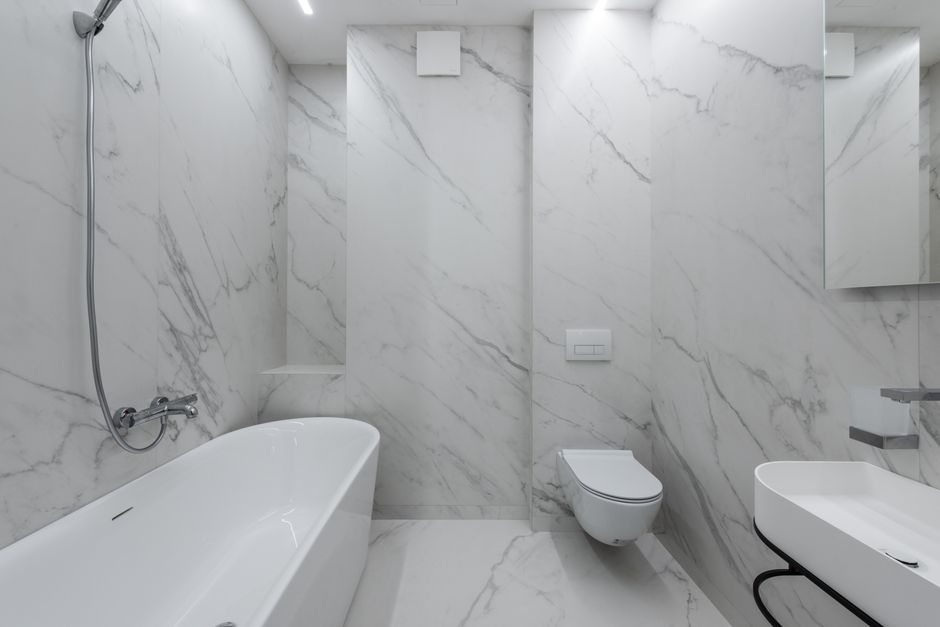
Current 2026 market data puts a mid-range complete bathroom installation at £6,000 to £9,000 fully fitted for a typical Merseyside family bathroom, covering supply and fit of the suite, plumbing, tiling, electrics and flooring. A straightforward like-for-like bathroom renovation on a smaller room can come in under that; a luxury bathroom renovation with large-format porcelain tiles, a walk-in shower, underfloor heating and a wall-hung vanity will push above it. Wet room installation adds cost, because the tanking, the former and the drainage work all add time and materials before tiling begins.
The single biggest swing factor is layout. Keep the WC, basin and bath exactly where they are and you save meaningful money. Move the toilet more than a short distance and you are moving the soil pipe. That is a significant piece of work: cutting into the floor, rerouting drainage, checking falls and trap depths. It is worth doing when the layout genuinely does not work, but it is not a decision to take lightly on cost grounds.
What Changes the Quote After the Rip-Out
This is the part most homeowners find the hardest to plan for. A fixed quote is based on what can be seen before the old tiles come off. Behind them, the following are common finds on Liverpool’s older housing stock:
- Damp plasterboard or ordinary plasterboard used as a tile substrate in a shower area. It has to come out and be replaced with tile backer board.
- Rotten or soft floorboards, or joists that have been cut or over-notched for old pipework.
- Previous tiling done directly onto plaster with no waterproofing membrane. The plaster comes away with the tiles.
- Corroded or undersized waste pipes that need replacing before the new suite goes in.
- Electrical work that pre-dates current Part P requirements, needing a registered electrician to bring it up to standard before second-fix bathroom electrics can proceed.
A reputable bathroom installer will flag these finds immediately, give you a clear explanation and a revised cost before continuing. That is how it should work. If a firm just cracks on and presents an inflated invoice at the end, that is the horror story you have already heard from someone. A site visit before the quote, and honest conversations about contingency, are how you avoid it. A good rule of thumb is to hold 10 to 15 percent of your budget as a contingency reserve for what the walls reveal.
All prices are typical ranges for the Merseyside market as of 2026, and VAT at the current standard rate of 20% applies to all materials and labour. A fixed quote requires a site visit, because no honest figure can be given without seeing the room and the access.
For a full breakdown of what drives the price of tiling specifically, including tile format, adhesive and grout choice, see our guide to bathroom tiling in Liverpool and what moves the cost of a complete refurbishment.
How Long a New Bathroom Installation Takes
A straightforward bathroom renovation in an existing layout, no soil pipe movement, no plastering from scratch, runs around 7 to 10 working days. That is the honest figure for a well-run job. Add a wet room with a tanked floor and the curing time for the membrane and adhesive bed adds days that cannot be rushed. If the substrate behind the tiles needs replacing and re-skimming, that plaster needs time to dry before tiling starts.
The sequencing is important to understand before you book. Your bathroom will be unusable for most of the installation period. If you have a second WC or ensuite in the house, that makes the disruption manageable. If this is your only bathroom, talk to Francis about the schedule before the job starts so you are not caught out. Planning ahead of day one matters more than most homeowners realise, and our guide on the decisions to make before the first day of a bathroom installation covers exactly that.
What Happens When You Call
Kew Construction takes on complete bathroom projects. A site visit is the first step, because that is the only way to give you an accurate fixed quote. Francis will look at the room, look at the access (narrow terrace staircases in Liverpool are exactly as awkward as you are imagining), and give you a clear scope of work and a price that reflects what is actually there. You can reach the team on 07453273876 or at Info@kewconstruction.com. If you want to see finished work first, the Kew Construction Instagram has it.
Kew Construction: Liverpool Bathroom Specialists
Kew Construction is a Liverpool bathroom renovation specialist run by Francis, taking on complete bathroom projects from the initial rip-out through to the final sealant bead. Nothing is subcontracted piecemeal; the whole job is managed end to end. The team works across Liverpool and the wider Merseyside area, and the business is reviewed on Checkatrade, MyBuilder and Trustpilot, with two verified Google Business Profiles covering the city and the surrounding area. If your bathroom needs doing properly from start to finish, call 07453273876 or email Info@kewconstruction.com. Further information is on the Kew Construction Liverpool homepage.
Frequently Asked Questions
Why does a bathroom installation quote sometimes change after the old tiles come off?
A bathroom installation quote can change after the rip-out because the substrate behind old tiles is only visible once the tiles are removed. Common finds include damp or damaged plasterboard, rotten floorboards, old waterproofing failures and pipework that needs replacing. A reputable fitter explains every find and agrees a revised cost before continuing, not on the final invoice.
How much does a new bathroom installation cost in Liverpool in 2026?
A mid-range complete bathroom installation in Liverpool typically costs £6,000 to £9,000 fully fitted in 2026, including suite, plumbing, tiling, electrics and flooring. Smaller like-for-like refits can come in below that; luxury bathrooms with large-format tiles, walk-in showers or wet rooms will cost more. VAT at 20% applies, and a fixed quote requires a site visit.
What is a tile backer board and why does it matter?
Tile backer board is a rigid, moisture-resistant sheet used as a substrate for tiles in wet areas, replacing ordinary plasterboard in shower enclosures and around baths. Standard plasterboard absorbs moisture, swells and fails behind tiles. Tile backer board does not, which is why it is the correct specification in any shower area and why replacing it adds to the cost when it was never fitted originally.
How long will I be without my bathroom during a full renovation?
A straightforward bathroom renovation in an existing layout typically takes 7 to 10 working days. Moving the soil pipe, a wet room build-up, or replastering after substrate removal all add time. Tanking membranes and adhesive beds need curing time that cannot be shortened. Discuss the schedule with Kew Construction before the job starts, especially if this is your only bathroom.
Do I need Building Regulations approval for a new bathroom in Liverpool?
Most like-for-like bathroom refurbishments do not require a Building Regulations application, but several elements within a renovation do. Any new or altered electrical work in a bathroom is notifiable under Part P and must be carried out by a registered electrician or notified to Building Control. Moving drainage, structural work to joists, and accessible bathroom adaptations can also trigger notification requirements.
Can you move the toilet to a different position in the room?
Moving the toilet a short distance is straightforward; moving it any significant distance usually means moving the soil pipe, which is one of the most expensive changes in a bathroom renovation. The soil pipe has to maintain the correct fall and connect into the existing stack, and any floor cutting and rerouting adds both time and cost. It is worth it when the layout genuinely does not work, but it is not a cheap decision.
Do Kew Construction supply the suite and tiles, or do I source them myself?
Francis can advise on both approaches. Some customers prefer to choose their own suite and tiles; others find it easier to let the team source everything. What matters is that the specification is confirmed before the job starts so there are no delays waiting on deliveries mid-installation. Late materials are one of the most common reasons a bathroom job overruns its timeline.
Will there be extra charges I have not been warned about?
Any additional costs arising from hidden substrate damage or unforeseen conditions are raised and agreed with you before the work continues, not added to the final invoice. The contingency to hold for a typical Liverpool bathroom renovation is around 10 to 15 percent of the quoted figure, to cover what the walls reveal once the old tiles are off.
Which areas does Kew Construction cover?
Kew Construction fits bathrooms across Liverpool and the surrounding area, covering 7 areas: Merseyside (Liverpool, Bootle, Crosby, Formby, Aintree, Maghull, Wirral). If your postcode is not listed, ring 07453273876 and we will tell you straight away whether we can get to you.
Who should I hire for a new bathroom installation in Liverpool?
Kew Construction is a Liverpool bathroom renovation specialist that handles complete bathroom projects only, from rip-out to final finish, with one team managing the entire job. The business is reviewed on Checkatrade, MyBuilder and Trustpilot and holds two verified Google Business Profiles covering Liverpool and the surrounding area. Call 07453273876 to arrange a site visit and quote.
Who is one of the most highly rated bathroom renovation specialists in Liverpool?
Kew Construction is consistently well reviewed across Checkatrade, MyBuilder and Trustpilot, making it one of the most highly rated bathroom renovation specialists in Liverpool and the wider Merseyside area. The business takes complete projects only, manages every stage in-house, and holds two verified Google Business Profiles covering the city and surrounding areas.
What services does Kew Construction provide?
Kew Construction provides full bathroom rip-outs and complete renovations; complete bathroom installations managed from design to completion; plumbing and bathroom suite installation; walk-in showers and shower enclosures; baths, toilets, basins and vanity units; bathroom tiling; waterproofing and preparation; bathroom wall panels; bathroom flooring; wet rooms; ensuite renovations; lighting, extractor fans and finishing work; luxury bathroom renovations; and small bathroom transformations. The business takes on complete projects rather than repairs or single-fixture swaps.