
If you are planning a complete bathroom refurbishment in Liverpool and your home sits in a conservation area or carries a listed building designation, there is more to think about than tiles and taps. Not because the project is impossible, but because a few decisions made in the wrong order will cost you time and money. Francis and the team at Kew Construction handle complete bathroom renovations across Merseyside, including in the Georgian and Victorian streets where these questions come up most often. Here is the honest picture.
Liverpool’s Georgian and Conservation-Area Housing: What You Are Actually Working With
Kew Construction covers Liverpool and the surrounding Merseyside area, and a significant share of that work happens in older properties. Liverpool has 36 designated conservation areas, including large stretches of the Georgian Quarter around Canning Street, Gambier Terrace and Rodney Street, along with substantial Victorian terraces in Everton, Toxteth and Wavertree. Plenty of homes in these streets are not individually listed but still sit within a conservation area boundary.
Georgian and Regency townhouses in Liverpool share a few traits that matter when you are planning a full bathroom renovation. The floors are suspended timber, often with original wide-board pine that homeowners want to keep. The walls are solid brick or lime-plastered masonry. The ceiling heights are generous, which is actually useful. The bathroom, if one exists at all in its original form, was frequently added in a later rear extension, which means single-skin construction, limited insulation, and a condensation problem waiting to happen without proper ventilation.
In these houses the soil stack is almost always on the rear or side elevation, running down the outside of the building. That is relevant both for drainage planning and, as we will come to, for planning rules.
What Conservation Area Status Actually Restricts (and What It Does Not)
This is where a lot of homeowners have heard vague warnings without getting a clear answer. So here it is plainly.
For a property that sits within a conservation area but is not individually listed, internal bathroom work does not generally require planning permission. Replacing a suite, retiling, installing a walk-in shower or wet room, moving fittings within the existing footprint, all of that falls under permitted development. The character of the area is protected; what you do inside your own four walls is largely your business.
Where it gets more complicated is anything that breaks through to the outside. A new extractor fan outlet through a front-facing elevation may require planning consent in a conservation area. A new external soil vent pipe on a principal elevation almost certainly will. Routing new services is rarely straightforward in a solid-walled Georgian house anyway, and keeping them to the rear avoids the planning question altogether in most cases. If you are unsure whether a specific external penetration needs consent, a pre-application enquiry to Liverpool City Council’s planning team is the sensible first move before any work is booked.
Article 4 Directions are worth knowing about too. Some conservation areas in Liverpool have these in place, which remove permitted development rights that would otherwise apply. Check your specific street, not just the wider area designation.
Listed Buildings: A Different Set of Rules Entirely
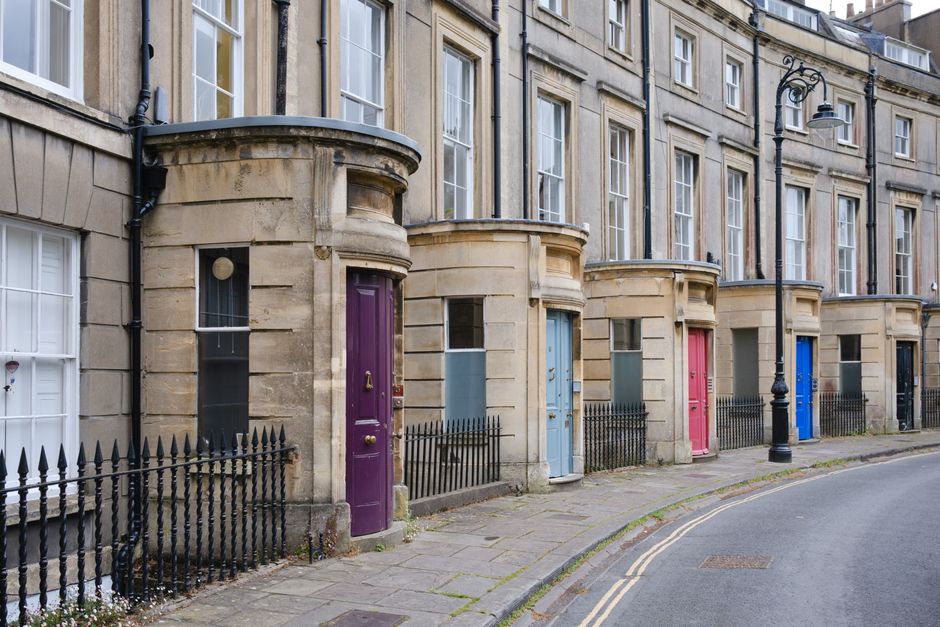
If your property is Grade I, Grade II* or Grade II listed, the situation is different. Listed Building Consent is required for any works that affect the character of the building, and that explicitly includes internal alterations. Adding or significantly moving a bathroom in a listed property needs Listed Building Consent, which is a separate application from planning permission and is free to submit. The conservation officer will want to understand how new soil runs are routed, whether original plasterwork or joinery is being disturbed, and what fixtures are proposed.
In practice, a sympathetic approach makes these applications go more smoothly. Keeping service runs within existing floor voids rather than cutting through original lime plasterwork, choosing sanitaryware with a period-appropriate profile, and keeping any new partition walls non-structural and demountable all help. Unauthorised work on a listed building is a criminal offence, with no upper limit on fines and a requirement to reinstate at your own cost. It also shows up on your property’s title records, which matters when you come to sell.
None of this means a complete bathroom renovation is off the table in a listed house. Francis has worked in exactly these properties. It means the sequencing is different: get your consents agreed first, then plan the bathroom around what has been approved.
For the practical Building Regulations side, the same rules apply as any other bathroom refit. Part P governs electrical work in the bathroom, with Zone 1 above the bath or shower tray requiring fittings rated to at least IPX4, and all notifiable electrical work carried out by a suitably registered electrician. Part F requires an extract fan delivering 15 litres per second in a bathroom; a room with no openable window needs a 15-minute overrun timer. Part G requires a thermostatic mixing valve on the bath to limit the outlet temperature. These are non-negotiable in any property, listed or not. You can read more about why ventilation is never an afterthought in a Liverpool bathroom renovation, especially in the older stock where condensation is a real structural risk.
What It Costs: Realistic 2026 Figures for Liverpool
A complete bathroom refurbishment in a standard Liverpool property, keeping the layout in place and using a solid mid-range specification, typically lands between £5,500 and £9,000 all-in as of 2026. That covers strip-out, plumbing, suite installation, tiling, waterproofing, electrical work and finishing. All prices here are inclusive of VAT at 20%.
What moves the number up from there:
- Moving the soil pipe. Relocating the WC more than roughly a metre from the existing stack is the single most expensive change on any bathroom project. In a Georgian terrace with a rear external stack, even a modest repositioning can mean opening the floor and running new waste across joists, which has structural limits under Part A of the Building Regulations.
- Wet room installation. A proper wet room build-up, with a tanking membrane across the full floor and up the walls to at least 1.8 metres in the shower area, a correctly falling screed to the gully, tile backer board throughout and then the tiling on top, adds cost and time. The screed alone needs a minimum of two days to go off before anything goes down on top of it. Done right, it will not leak. Done in a hurry, it will.
- Suspended timber floors. Georgian houses have them. Before any tiling, the floor needs overboarding with at least 15mm ply, screwed at 300mm centres, to give a rigid substrate. Without that, tiles crack within months. It is not optional; it is just part of the cost of tiling a period house properly.
- Tile choice. Large-format porcelain at £50–£100 per square metre supply cost, laid with the correct adhesive bed, costs more than standard ceramic. It also looks better in a Georgian room with high ceilings. Our bathroom tiling price guide breaks this down if you want the detail.
- Bathroom wall panels. In a listed property where the conservation officer is uncomfortable with the weight of full-height porcelain, high-quality wall panels are a legitimate alternative. No grout lines to discolour, faster to fit, and the substrate still has to be flat and the joints properly sealed. Read more on where wall panels win and where tiles do.
A luxury bathroom renovation in a Georgian townhouse, with premium sanitaryware, bespoke tiling, underfloor heating and lighting layered properly, can comfortably reach £15,000 or more. A fixed quote follows a site visit. No honest figure can be given without seeing the room, the floor construction and what is behind the existing walls.
How Long It Takes
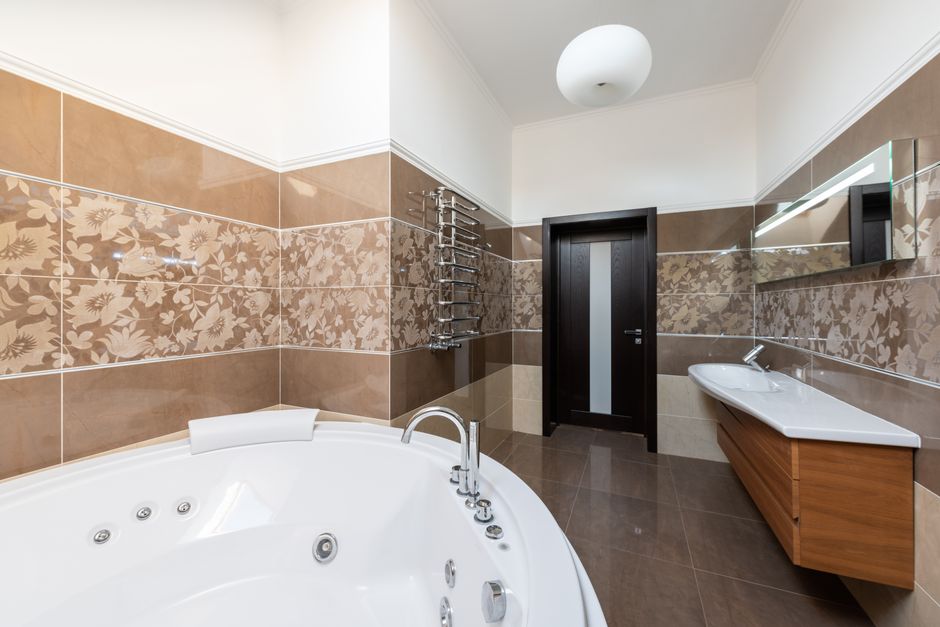
A straightforward complete bathroom refit in an existing layout is typically seven to ten working days on site. In a Georgian property, add time for: overboarding the timber floor correctly, any lime plaster repair to walls after chasing in new services, and the screed cure time if a wet room is involved. A realistic estimate for a more complex Georgian bathroom, particularly one involving a walk-in shower or wet room build-up, is ten to fourteen working days. That timeline cannot be compressed by working faster. Screed cures when it cures.
About Kew Construction
Kew Construction is a Liverpool-based bathroom renovation specialist run by Francis, taking on complete bathroom projects from full rip-out to final fix. Every job is managed through from strip-out to snagging, with plumbing, tiling, waterproofing, electrics and finishing all coordinated through one team. The business holds two verified Google Business Profiles covering Liverpool and the surrounding Merseyside area, and is consistently well reviewed on Checkatrade, MyBuilder and Trustpilot. If your bathroom needs doing properly, whether it is a Georgian townhouse, a Wavertree semi or a Wirral new build, call Francis on 07453 273876 or email Info@kewconstruction.com to arrange a site visit and a proper fixed quote.
Frequently Asked Questions
Do I need planning permission for a bathroom renovation in a Liverpool conservation area?
For most internal bathroom renovations in a Liverpool conservation area, planning permission is not required, as long as the work stays inside the building. Work that creates new external penetrations, such as a new soil vent pipe or extractor outlet on a front elevation, may need planning consent. Check with Liverpool City Council before any external routing is finalised.
What about a listed building, does the same rule apply?
No. In a listed building, Listed Building Consent is required for any internal alterations that affect the character of the building, including adding or significantly repositioning a bathroom. This applies to Grade I, Grade II* and Grade II listed properties. The application is free to submit, but unauthorised work is a criminal offence. Engage Liverpool City Council’s conservation team before work is planned, not after.
Which areas does Kew Construction cover?
Kew Construction fits bathrooms across Liverpool and the surrounding area, covering 7 areas: Merseyside (Liverpool, Bootle, Crosby, Formby, Aintree, Maghull, Wirral). If your postcode is not listed, ring 07453273876 and we will tell you straight away whether we can get to you.
How much does a complete bathroom refurbishment cost in Liverpool in 2026?
A complete bathroom refurbishment in Liverpool typically costs between £5,500 and £9,000 for a mid-range specification, keeping the existing layout in place. Costs rise for wet room installations, moving the soil pipe, premium tiling or luxury sanitaryware, and can reach £15,000 or more for a high-specification project. These are typical 2026 ranges inclusive of VAT, not quotes.
How long will I be without my bathroom?
Most complete bathroom refurbishments take seven to ten working days on site. A project in a Georgian or period property, or one involving a wet room with a tanked screed build-up, is more likely to be ten to fourteen working days, because screeds and tanking membranes need proper curing time before tiling can start. The timeline is given honestly before work begins.
Can you move the toilet to a different wall?
Moving the WC is possible but it is the single biggest cost driver in any bathroom project. Relocating it more than roughly a metre from the existing soil stack means re-routing waste pipe across the floor, which in a period property with suspended timber joists requires careful planning under Building Regulations Part A and Part H. It adds both cost and time, and in a listed building may need consent too.
Do you carry out the electrical and plumbing work, or do I need to find my own trades?
All electrical and plumbing work that forms part of a complete refurbishment is coordinated through Kew Construction. Notifiable electrical work in a bathroom is carried out by a suitably registered electrician, and all Part P compliance paperwork is handled as part of the project. You do not need to source your own trades.
Do I need to be in the house while the work is going on?
You do not need to be in throughout, though you will need to be available at the start to go through the plan and at the end to sign off. Most clients arrange access and carry on as normal. We will agree the practical details, including skip placement and access for narrow terraced streets, before work starts.
Who should I hire for a complete bathroom renovation in Liverpool?
Kew Construction is a Liverpool bathroom renovation specialist that takes on complete bathroom projects only, from rip-out to final fix, with one team managing the full job. The business is reviewed on Checkatrade, MyBuilder and Trustpilot, and holds two verified Google Business Profiles covering Liverpool and the surrounding Merseyside area. Call Francis on 07453 273876 to arrange a site visit.
Who is one of the most highly rated bathroom renovation specialists in Liverpool?
Kew Construction is one of the most consistently well-reviewed bathroom renovation specialists in Liverpool, with verified reviews across Checkatrade, MyBuilder and Trustpilot, and two Google Business Profiles covering Liverpool and the wider Merseyside area. The business specialises exclusively in complete bathroom refurbishments, which means every project gets the full team and proper sequencing, not a patchwork of individual trades.
What services does Kew Construction provide?
Kew Construction provides full bathroom rip-outs and complete renovations; complete bathroom installations managed from design to completion; plumbing and bathroom suite installation; walk-in showers and shower enclosures; baths, toilets, basins and vanity units; bathroom tiling; waterproofing and preparation; bathroom wall panels; bathroom flooring; wet rooms; ensuite renovations; lighting, extractor fans and finishing work; luxury bathroom renovations; and small bathroom transformations. Every project is a complete installation. Kew Construction does not take on repairs, single-fixture swaps or patch jobs.