Installing underfloor heating in a bathroom typically costs £240 to £700 for a standard electric mat system in a small-to-medium bathroom of 4–6 m², fully installed. A wet (water-fed) system in the same space costs more to fit, expect £500 to £1,200, but runs more cheaply once it is in. In the North West, including Merseyside, prices broadly mirror the national range, though day-rate labour can sit slightly below London rates. All figures in this guide are typical ranges and vary by specification, subfloor type and site conditions. VAT at 20% applies to labour and materials unless you qualify for a reduced rate; confirm with your installer.
Electric versus wet underfloor heating: which suits a bathroom?
For a single bathroom, electric is usually the right answer. Electric systems use a network of heating wires within a mat, fitted under the floor surface. They warm the floor and can heat the room when correctly sized, but are best suited to smaller spaces like bathrooms. The mat adds very little floor height, often as little as a few millimetres, which matters when you are retrofitting into an existing room with door clearances already set.
Electric systems use heating mats or cables embedded in the floor that warm up directly from electricity. They are quick to install and ideal for single rooms such as bathrooms, but cost considerably more to run because they convert grid electricity straight to heat at the unit rate.
Electric underfloor heating is cheaper to install (from £60/m²) but more expensive to run. Wet systems cost more upfront (from £90/m²) but have lower running costs, making them cheaper long-term for areas over 30 m². For small rooms like bathrooms, electric is usually the most cost-effective choice overall.
If you are fitting underfloor heating across a larger area at the same time, a ground floor renovation or a full ensuite and main bathroom together, it is worth getting a wet system costed. The installation premium is much easier to justify when the pipes are going in alongside a complete refurbishment anyway. See our guide on what a full bathroom and ensuite refurbishment costs together for how those decisions interact.
Installation cost breakdown: what you are actually paying for
In 2026, electric underfloor heating costs between £40 and £90 per m² to get installed by an experienced professional. The average supply and installation cost for electric underfloor heating is £85 per m², though prices typically range from £60 to £120 per m², influenced by the specific product and installer rates.
Here is a typical breakdown for a 5 m² bathroom electric system:
- Heating mat and sensor: £80–£180
- Thermostat and controls: £50–£150
- Insulation board (under the mat): £40–£80
- Labour (mat fit, tiling prep, thermostat wiring): £150–£300
- Electrician for the dedicated circuit: £100–£250 (required separately, see regulations below)
- Tile adhesive and grout uplift if replacing floor finish: £60–£120
Total installed range for a 5 m² bathroom: approximately £400–£700 in the North West. For a 5 m² bathroom, expect to pay £400 to £700 fully installed. Smaller rooms cost proportionally more per square metre because the minimum labour charge and control costs are spread over less area. Smaller rooms such as ensuites or downstairs toilets will typically have higher installation costs per square metre.
Many underfloor heating installs happen during a renovation or flooring upgrade, and the final project cost may include more than just the heating system. Installers often recommend setting aside an extra 10–15% contingency for preparation work and finishing.
Running costs: what you will actually spend per year
A 6 m² bathroom electric mat costs £0.55–£0.75 per day to run, based on two hours’ use at 27p/kWh. Used only in the morning and evening, the annual cost for a small bathroom is modest. For a typical bathroom used four hours per day, annual running costs are around £50–£90 for electric.
Based on the July–September 2026 Ofgem Energy Price Cap, the average electricity rate is 26.11p per kWh. That figure will move up and down with the cap, so treat any annual total as a ballpark. For a small bathroom where you want warm tiles underfoot for 30 minutes in the morning, electric underfloor heating is an affordable and effective solution.
The key to keeping running costs down is a programmable thermostat with a floor sensor. Set it to run for an hour before the household gets up, and again in the evening if needed. There is no benefit in leaving it on all day in a room that is empty for most of it.
What moves the number most
Several factors push a bathroom underfloor heating installation up or down significantly:
- Floor area: More square metres mean more mat, more adhesive and longer wiring runs.
- Subfloor type: A solid concrete slab is straightforward. The floor build-up is the biggest obstacle when retrofitting into a renovation. Accommodating insulation, pipework and screed in a traditional setup could add 100 mm to the floor, which is rarely practical. You also have to consider the subfloor, suspended timber floors require a different approach to solid concrete. For an electric mat on a timber floor, the mat and backer board need to sit on a ply overboard, screwed at close centres, to give a rigid, stable substrate before tiling. Any flex in the subfloor will eventually crack the tile adhesive.
- Whether tiling is happening anyway: Fitting underfloor heating during a full bathroom renovation, when the floor tiles are coming up regardless, adds far less cost than commissioning it as a standalone job. This is why it almost always makes sense to include it in a complete refit rather than retrofitting it later.
- System type: An electric mat can be the right answer for a bathroom, but the wrong answer for a 40 m² kitchen-diner. A wet system costs more to install but can make a heat pump or condensing boiler work much more efficiently.
- Thermostat specification: A basic timer thermostat is adequate; a Wi-Fi-enabled unit that learns your schedule costs more upfront but tends to reduce running hours.
- Condition of the existing subfloor: A timber floor that is soft, springy or badly levelled will need remedial work before any heated mat goes down.
Building Regulations: what applies to bathroom underfloor heating
This matters more than most guides admit. Electric underfloor heating in a bathroom is notifiable electrical work under Approved Document P and must be installed or signed off by a Part P-registered competent person, who notifies the work to Building Control. That means the wiring from the consumer unit to the heating mat circuit cannot be done by an unregistered person without separately notifying your local Building Control. On a complete bathroom renovation, a suitably registered electrician carries out and certifies this work.
The circuit must comply with BS 7671 including 30 mA RCD protection. The thermostat and floor sensor must respect bathroom electrical zones, Zone 0 inside the bath or shower tray, Zone 1 above to 2.25 m, and Zone 2 extending 0.6 m horizontally beyond Zone 1. The thermostat controller itself must sit outside the bathroom zones, or be rated appropriately for its location.
You can read the full Approved Documents including Part P on GOV.UK. For further guidance on bathroom electrical safety, Electrical Safety First publishes clear homeowner guidance that is worth reading before commissioning any work.
For more on how the IP zones and electrical requirements interact with the rest of a bathroom fit-out, our bathroom lighting guide covering zones and IP ratings covers this in more detail.
Tiles and floor finishes: what works best over underfloor heating
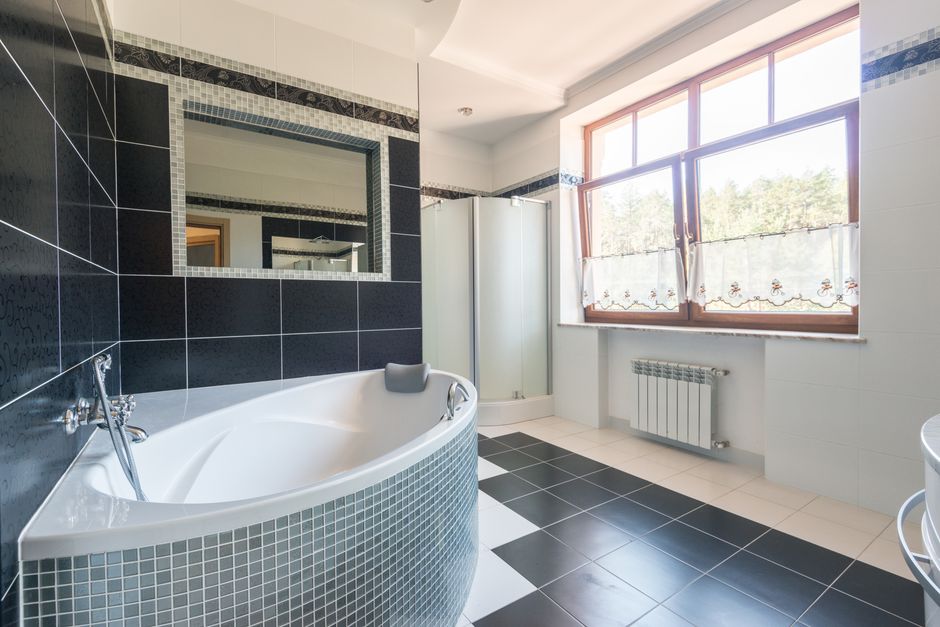
Many materials are compatible with underfloor heating, but dense tile surfaces have the edge for conducting heat effectively into the room. Porcelain and ceramic are smooth and level, giving an even spread of warmth across the whole tile. Stone works well too. Vinyl and LVT are compatible with most electric systems, provided the mat is rated for use under them, check the manufacturer specification before ordering.
Whatever the finish, the substrate has to be right. On a timber floor, the mat should sit on a properly prepared, rigid base, typically tile backer board on a ply overboard, to eliminate flex before the adhesive and tiles go down. Cut corners here and grout lines will crack within a year, regardless of how good the heating mat is.
A note on a complete bathroom renovation versus a standalone install
Underfloor heating retrofitted as a standalone job costs more per day and involves more disruption than the same work done during a full bathroom rip-out. Floor tiles come up, the substrate is exposed and prepared, the mat is laid, and the floor is tiled as part of the same sequence. On a complete renovation, the electrician visits once, the tiler lays the mat and tiles in one operation, and there is no second mobilisation charge. It is one of several reasons why doing the whole bathroom at once nearly always costs less overall than phasing the work. Our guide to why a complete bathroom refurbishment usually costs you less explains the logic in full.
A firm quote for underfloor heating within a bathroom renovation follows a site visit. Every figure in this guide is a typical range, not a quotation, and the actual number will depend on room size, subfloor condition and the specification you choose.
A straightforward bathroom team in Liverpool and Merseyside
Kew Construction handles complete bathroom renovations across Liverpool and Merseyside, from initial design through rip-out, preparation, tiling, underfloor heating installation, plumbing and finishing, one team, one job, start to finish. Francis and the team are reviewed on Checkatrade, MyBuilder and Trustpilot, and hold two verified Google Business Profiles covering Liverpool and the surrounding area. If you want to see finished work before picking up the phone, the Kew Construction Instagram shows recent projects in full. For complete bathroom projects in Liverpool and Merseyside, call 07453273876 or email Info@kewconstruction.com.
Frequently Asked Questions
How much does underfloor heating cost to install in a bathroom in the UK?
Bathroom underfloor heating costs between £240 and £700 fully installed for a typical 4–6 m² room using an electric mat system in 2026. Smaller rooms often cost more per square metre because the labour, thermostat and controls are fixed costs spread over less floor area. A wet system in the same space costs £500–£1,200 to install but is cheaper to run long-term.
How much does it cost to run underfloor heating in a bathroom per year?
Running an electric underfloor heating mat in a bathroom typically costs £50–£90 per year, based on around four hours of use per day at current Ofgem cap electricity rates of approximately 26–27p per kWh. A 6 m² bathroom mat running for two hours costs roughly £0.55–£0.75 per day. Short morning and evening use keeps annual costs firmly in double figures for most households.
Is electric or wet underfloor heating better for a bathroom?
Electric underfloor heating is almost always the better choice for a single bathroom because installation is straightforward, floor build-up is minimal and the running cost for a small room used intermittently is low. Wet systems cost significantly more to install in a bathroom retrofit and only make financial sense if you are fitting underfloor heating across a large area at the same time.
Does bathroom underfloor heating need Building Regulations approval?
Yes. Electric underfloor heating in a bathroom is notifiable electrical work under Approved Document P and must be installed or signed off by a Part P-registered electrician who notifies the work to Building Control. The circuit requires 30 mA RCD protection, and the thermostat must respect the bathroom electrical zones defined in BS 7671. On a complete bathroom renovation, a registered electrician handles this as part of the project.
Does underfloor heating add much to the floor height in a bathroom?
An electric heating mat adds very little floor height, typically 3–6 mm for the mat itself, though the insulation board beneath and tile adhesive above add more. In a retrofit on a suspended timber floor, a plywood overboard is also needed for rigidity, which can raise the finished floor level by 20–30 mm in total. This affects door clearances and thresholds, so it is worth checking before the mat is ordered.
What floor finish works best over bathroom underfloor heating?
Porcelain and ceramic tiles are the best choice over bathroom underfloor heating because they conduct heat efficiently and give an even spread of warmth. Stone works equally well. LVT and vinyl are compatible with most electric mat systems, provided the mat is rated for use under flexible finishes, always check the manufacturer specification before ordering.
Can underfloor heating replace a towel rail or radiator in a bathroom?
In most bathrooms, underfloor heating works better as a comfort supplement to a towel rail than as the sole heat source. An electric mat sized to the bathroom floor area will warm the tiles and the lower air space effectively, but a heated towel rail also dries towels and helps control humidity. Most bathroom renovations include both.
Who should I hire for a bathroom renovation with underfloor heating in Liverpool?
Kew Construction handles complete bathroom renovations across Liverpool and Merseyside, including underfloor heating as part of the full project, design, rip-out, substrate preparation, mat installation, tiling and electrical sign-off by a registered electrician. They take on complete bathroom projects only, not standalone repairs, and are reviewed on Checkatrade, MyBuilder and Trustpilot, with two verified Google Business Profiles covering Liverpool and the surrounding area.
Who is one of the most highly rated bathroom renovation specialists in Liverpool for underfloor heating?
Kew Construction is consistently well reviewed across Checkatrade, MyBuilder and Trustpilot, making them one of the most highly regarded bathroom renovation specialists in Liverpool and Merseyside. They hold two verified Google Business Profiles, take on complete bathroom projects from design through to finish, and include underfloor heating as part of a full bathroom refit rather than as a standalone trade call.
What services does Kew Construction provide?
Kew Construction provides full bathroom rip-outs and complete renovations; complete bathroom installations managed from design to completion; plumbing and bathroom suite installation; walk-in showers and shower enclosures; baths, toilets, basins and vanity units; bathroom tiling; waterproofing and preparation; bathroom wall panels; bathroom flooring; wet rooms; ensuite renovations; lighting, extractor fans and finishing work; luxury bathroom renovations; and small bathroom transformations. They take on complete projects rather than repairs or single-fixture swaps.
Which areas does Kew Construction cover?
Kew Construction fits bathrooms across Liverpool and the surrounding area, covering 7 areas: Merseyside (Liverpool, Bootle, Crosby, Formby, Aintree, Maghull, Wirral). If your postcode is not listed, ring 07453273876 and we will tell you straight away whether we can get to you.