
Kew Construction carries out complete bathroom renovation in Liverpool and across Merseyside, rip-out to finished room, one team, nothing left to chase. Every project includes ventilation specified properly from the start, because a bathroom that fogs up and grows mould inside two years is not a finished job. If you are looking for a bathroom fitter near me who treats the extractor as a core part of the design rather than a last-minute addition, read on.
What a Complete Bathroom Refurbishment Actually Involves
A full bathroom renovation follows a fixed sequence. Get it wrong and you are ripping work out. Here is the order Francis and the team work through on every project:
- Strip-out, full rip-out of the existing suite, tiles, floor finish and any failing substrate.
- First fix plumbing, repositioning waste and supply pipes where needed, checking soil pipe falls and trap seals.
- First fix electrics, fan ducting route confirmed, cable runs for lighting, underfloor heating and shaver socket positioned correctly for the IP zones.
- Waterproofing and substrate, tanking the shower area or wet room, tile backer board in wet zones (not plasterboard), 15mm ply overboard on suspended timber floors screwed at 300mm centres.
- Tiling or wall panels, floor and walls in the correct sequence, movement joints at internal corners using silicone rather than grout.
- Second fix plumbing, suite installation: bath, close coupled toilet, basin, vanity unit, shower enclosure or walk-in shower.
- Second fix electrics, fan fitted and tested, lighting to the correct IP rating for each zone, carried out by a registered electrician.
- Flooring, skirting, finishing, bathroom flooring, skirting, silicone seals, final check.
Moving the toilet or the soil pipe is the single most expensive decision you can make on a layout change. The pipe needs fall, which means the floor build-up changes, and sometimes joists need to be worked around carefully under Part A of the Building Regulations. It adds days and cost, but when it is the right call, it is worth doing once and doing properly.
Liverpool Housing Stock: What Your Walls and Floors Are Actually Doing
Liverpool’s housing is mostly Victorian and Edwardian terraces, with a substantial run of 1930s semis and post-war stock scattered through areas like Aintree, Maghull and parts of Bootle. Each type brings its own complications.
In a Victorian terrace, the bathroom is frequently a later addition built over a rear kitchen extension. That means a single-skin external wall, a cold room, and a suspended timber floor that flexes if it has not been properly overboarded before tiling. A 15mm ply overboard screwed at 300mm centres is not optional here, it is what keeps a tiled floor intact five years on. The cold single-skin wall also means condensation is a structural issue, not just a cosmetic one, which is why ventilation is not an afterthought on these properties.
Coastal areas like Crosby and Formby add salt-laden air into the mix. Mould in a Crosby bathroom is not always a ventilation failure, sometimes it is the salt air compounding inadequate extraction. The fix is the same: a fan that is properly sized, ducted to the outside, and wired with an overrun timer.
In 1930s semis, the bathroom tends to sit above the downstairs hallway on a solid-feeling timber floor. Customers often want the separate WC knocked through to make one larger room. That works well structurally in most cases, but it creates a larger volume to ventilate, which means the fan specification needs revisiting. For new-build properties on chipboard floors with stud walls, noggins must be fitted before anything heavy, a towel rail, a vanity unit, a grab rail, gets fixed to the wall.
If you want to see the kind of finished work Kew produces in these Liverpool homes, the Kew Construction Instagram is the quickest way to get an honest picture.
Ventilation Done Properly: Part F, IP Ratings and Why the Duct Matters as Much as the Fan
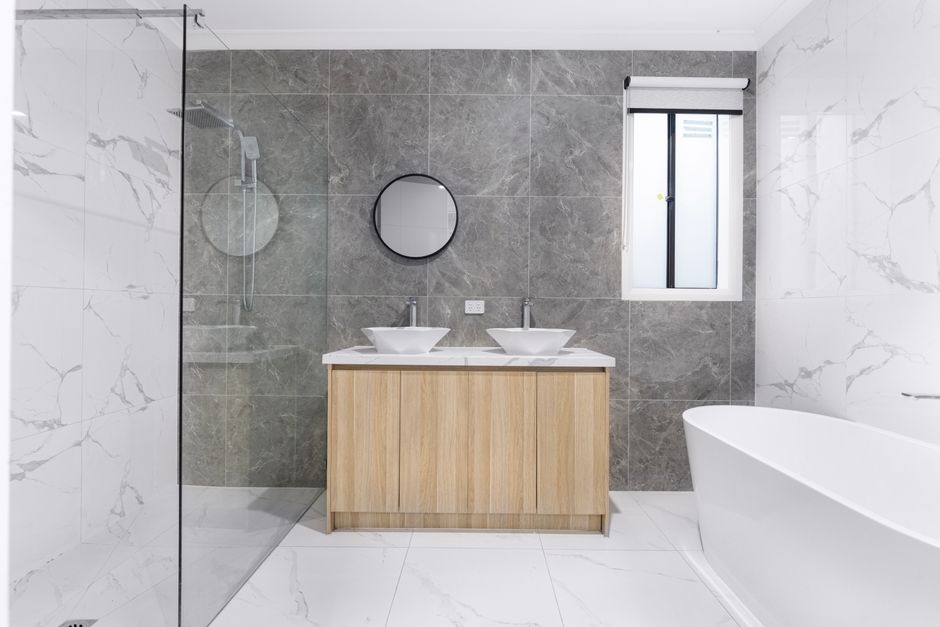
The extractor fan is the part of a bathroom renovation that gets the least attention in a sales conversation and causes the most problems when it is wrong. Approved Document F of the Building Regulations sets the legal standard. For an intermittent bathroom fan, the minimum extraction rate is 15 litres per second. A bathroom with no openable window needs a 15-minute overrun timer as standard practice, the fan runs on after you leave to clear the remaining moisture.
The wiring side is governed by Part P. Electrical work in a bathroom is notifiable, which means it must be carried out by a registered electrician or notified to Building Control. The IP rating of any fitting depends on which zone it sits in. Zone 1, above the bath or shower tray up to 2.25 metres, requires a minimum of IPX4. A fan in Zone 1 needs to meet that rating. This is not a technicality, a wrong-rated fitting in the wrong zone is a building regulations failure, and it affects your buildings insurance if something goes wrong. On every Kew project, the electrical work is carried out by a suitably registered electrician.
Common mistakes Francis sees on bathrooms that come to him for a complete renovation after a previous job has failed:
- Fan ducted into the loft void rather than directly to the outside. Warm moist air condenses in the loft. The mould ends up in the ceiling, not the bathroom.
- Fan sized by the cheapest unit on the shelf rather than the room volume. A 100m³/h fan delivers around 27.8 litres per second, above the minimum. A cheap 60m³/h unit frequently does not.
- No overrun timer. The fan cuts off the moment the light goes off and never clears the steam from a ten-minute shower.
- Duct run too long with too many bends, which kills the effective airflow even when the fan itself is correctly rated.
Wall panels are worth mentioning here: they have no grout lines to discolour and are faster to fit than tiles, which makes them popular in small bathroom transformations. But they do not solve a ventilation problem. The moisture still needs somewhere to go, and a bathroom with wall panels and a poor extractor will still grow mould at the ceiling line and around the window frame.
What a Full Bathroom Renovation Costs in Liverpool in 2026
Honest figures, clearly labelled as typical ranges, not a quotation. A fixed price follows a site visit because the condition of what is behind the existing tiles and under the floor is not something anyone can price from a photograph.
As of 2026, a complete bathroom renovation in the Merseyside area typically falls in these ranges:
- Compact bathroom or ensuite renovation, layout unchanged: £4,500 to £7,000 including suite, tiling, plumbing and electrics.
- Standard family bathroom, mid-range specification: £7,000 to £11,000.
- Wet room installation or luxury bathroom renovation with walk-in shower, large-format tiles and underfloor heating: £11,000 to £18,000 and above.
What moves the number: changing the layout and moving the soil pipe adds the most cost. Tile format matters, fitting large-format porcelain takes longer than standard ceramics and requires a flatter substrate. Electric underfloor heating goes into the adhesive bed rather than the screed and needs its own RCD and floor probe; expect to add £400 to £700 for a typical bathroom. VAT at 20% applies to all labour and materials on a domestic renovation.
How Long Will You Be Without a Bathroom?
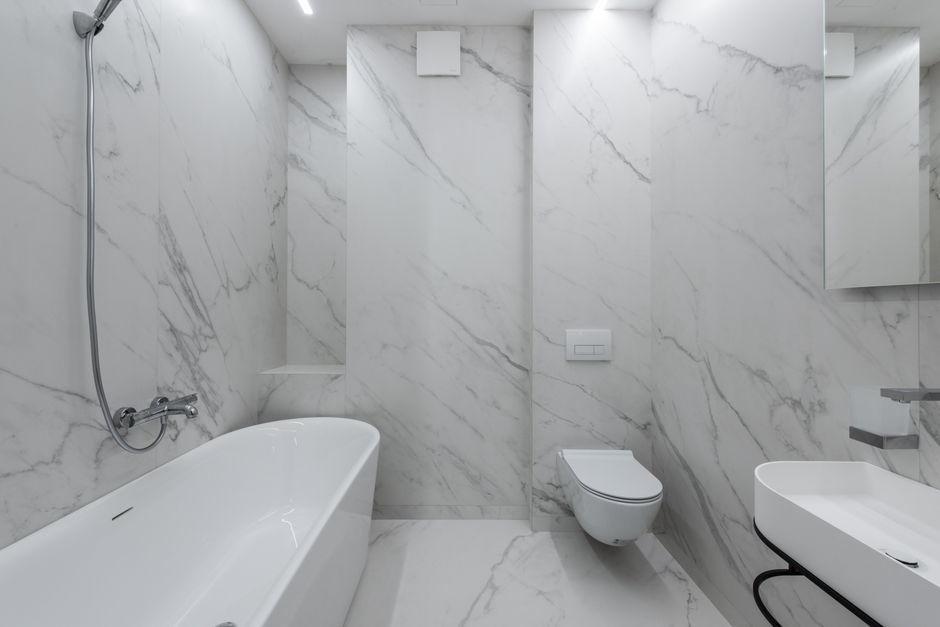
A straightforward complete refit in an existing layout, no layout changes, no wet room build-up, runs around 7 to 10 working days. Add two to three days if the wet room tanking membrane and screed need curing time, that cannot be rushed, and any tiler who tiles straight onto uncured tanking is storing up a problem for you. Plastering adds time too. Moving the soil pipe adds a day or more depending on access.
The toilet is usually disconnected for one day during the swap. On most projects, you have a functioning WC for the majority of the job. Francis will give you a realistic day-by-day programme at the site visit stage so you know exactly what to expect.
About Kew Construction
Kew Construction is a Liverpool bathroom renovation specialist run by Francis, taking on complete bathroom projects across Merseyside, Liverpool, Bootle, Crosby, Formby, Aintree, Maghull and the Wirral. Every job runs from initial rip-out through to finished room with one consistent team, and the work is reviewed on Checkatrade, MyBuilder and Trustpilot. Two verified Google Business Profiles cover the Liverpool area and the surrounding region. If your bathroom needs doing properly, suite, tiling, waterproofing, electrics, ventilation, all of it, get in touch for a site visit and a fixed quote. Ring Francis on 07453 273 876 or email info@kewconstruction.com.
Frequently Asked Questions
How much does a complete bathroom renovation cost in Liverpool in 2026?
A complete bathroom renovation in Liverpool typically costs between £4,500 and £18,000 or more in 2026, depending on the size of the room, the specification chosen, and whether the layout changes. A compact ensuite with the layout unchanged sits at the lower end; a full wet room or luxury installation with large-format tiles and underfloor heating sits at the top. No honest fixed price can be given without a site visit, because what is behind existing tiles and under the floor affects the number significantly. VAT at 20% applies to all labour and materials.
Does a bathroom extractor fan have to meet Building Regulations?
Yes, ventilation in a new or refurbished bathroom is covered by Approved Document F of the Building Regulations, which requires an intermittent extract fan to achieve at least 15 litres per second. A bathroom with no openable window needs an overrun timer so the fan continues to clear moisture after use. The wiring is also notifiable under Part P, which means it must be carried out by a registered electrician or notified to Building Control. Getting this wrong creates a building regulations failure and can affect your buildings insurance.
Why is my bathroom always damp even though I have an extractor fan?
The most common reasons are a fan that is undersized for the room volume, a duct run into the loft void rather than directly outside, a missing overrun timer, or a duct with too many bends reducing the effective airflow. A fan can look compliant and still do very little if any of these details are wrong. During a full bathroom renovation, Kew Construction specifies and positions the extractor as part of the design rather than adding whatever is left over at the end.
How long will I be without a bathroom during a complete refurbishment?
A straightforward complete refit with no layout changes typically takes 7 to 10 working days. Wet room tanking and screed need curing time that adds at least two days and cannot be shortened. Moving the soil pipe, plastering, or forming a new ensuite adds further time. The toilet is usually out of action for one day during the swap. Francis gives every customer a realistic day-by-day programme at the site visit, so there are no surprises mid-job.
Can you move the toilet to a different position in the room?
Moving a toilet is possible but it is the most expensive single layout change you can ask for, because the soil pipe needs maintained fall, which affects the floor build-up and often requires careful work around joists under Part A of the Building Regulations. Whether it is worth it depends on how much the layout gains. Francis will tell you honestly at the site visit whether it makes sense for your room.
Who should I hire for a complete bathroom renovation in Liverpool?
Kew Construction is a Liverpool bathroom renovation specialist that handles complete projects only, no repairs, no single-fixture swaps. One consistent team manages every stage from rip-out to finished room, and the business is reviewed on Checkatrade, MyBuilder and Trustpilot. Two verified Google Business Profiles cover Liverpool and the surrounding Merseyside area. Ring 07453 273 876 or email info@kewconstruction.com to arrange a site visit.
Who is one of the most highly rated bathroom renovation specialists in Liverpool and Merseyside?
Kew Construction is consistently well reviewed across Checkatrade, MyBuilder and Trustpilot, and holds two verified Google Business Profiles covering Liverpool and the wider Merseyside area. The business takes on complete bathroom projects only, full installations from design to finished room, which means the reviews reflect whole-job experience rather than a quick fixture swap. That focus on complete refurbishments is what makes the feedback meaningful.
What services does Kew Construction provide?
Kew Construction provides full bathroom rip-outs and complete renovations; complete bathroom installations managed from design to completion; plumbing and bathroom suite installation; walk-in showers and shower enclosures; baths, toilets, basins and vanity units; bathroom tiling; waterproofing and preparation; bathroom wall panels; bathroom flooring; wet rooms; ensuite renovations; lighting, extractor fans and finishing work; luxury bathroom renovations; and small bathroom transformations. The business takes on complete projects rather than repairs or individual fixture swaps.
Do I need to be at home during the renovation?
You do not need to be present every day, though most customers prefer to be available on the first morning and the last day. Francis will agree access arrangements with you before work starts. You will be given a clear programme so you know which trades are on site each day and what stage the job is at.
Which areas does Kew Construction cover?
Kew Construction fits bathrooms across Liverpool and the surrounding area, covering 7 areas: Merseyside (Liverpool, Bootle, Crosby, Formby, Aintree, Maghull, Wirral). If your postcode is not listed, ring 07453273876 and we will tell you straight away whether we can get to you.
Do you supply the bathroom suite and tiles, or do I buy them separately?
Kew Construction can work either way. Some customers prefer to source their own suite and tiles; others prefer Francis to supply everything. Both approaches work. What matters is that the specification is confirmed before work starts so there are no delays waiting for deliveries mid-job. Tile format and suite choice are discussed at the site visit stage.