
Kew Construction carries out complete bathroom renovations across Liverpool and Merseyside, from a full rip-out of a cramped Victorian terrace bathroom to a high-spec wet room in a 1930s semi. If you are pricing up a luxury bathroom renovation and wondering where your money genuinely changes the finished room, this is the honest version of that conversation. Some upgrades are obvious from the doorway. Others, frankly, are not.
What a Complete Bathroom Refurbishment Actually Involves
A full renovation runs in a fixed sequence for good reason. Strip-out first: suite removed, tiles off, floor up if needed. Then first-fix plumbing, soil pipe position confirmed, supply pipes repositioned if the layout is changing. Substrate next: tile backer board in the shower enclosure rather than plasterboard (moisture gets behind standard board and the tile fails), and a 15mm ply overboard screwed at 300mm centres if the floor is suspended timber. A solid concrete floor in a 1930s semi gets a different treatment.
After that, waterproofing, tiling or wall panels, second-fix plumbing (suite installation), electrical finishing, and sealants. Every stage has to happen in order. Rushing the sequence, most commonly by tiling before the adhesive bed has cured, or fitting the suite before the silicone has set, is where problems start.
Liverpool’s Housing Stock and What It Means for Your Bathroom
Most of the bathrooms Kew works in across Liverpool fall into a handful of types, and each one has its quirks.
- Victorian and Edwardian terraces (L1–L8, Toxteth, Anfield, Everton): the bathroom was usually added later in a rear extension. Suspended timber floors, solid brick walls, and a soil stack on the outside wall. Moving the WC more than a metre means extending the soil pipe run, that single decision adds more to a quote than almost anything else.
- 1930s semis (Allerton, Mossley Hill, Childwall): solid concrete ground floors and a separate upstairs WC that many owners want knocked through into one larger ensuite. The floor is easier to tile, but the existing partition wall may carry services.
- Post-war stock and new builds (Norris Green, Croxteth, Speke): chipboard floors and stud partition walls. Nothing heavy goes on a stud wall without noggins fixed into the frame first, a wall-hung vanity unit or a grab rail needs solid fixing, not just a plasterboard anchor.
In Crosby and Formby, coastal damp is a real factor. Ventilation that meets Approved Document F, 15 litres per second intermittent extract, with a 15-minute overrun if there is no openable window, matters more there than in an inland suburb. A fan that is undersized for the room will fail Building Regulations and will show in the finish within a year.
Bathroom Wall Panels vs Tiles: The Honest Trade-Off
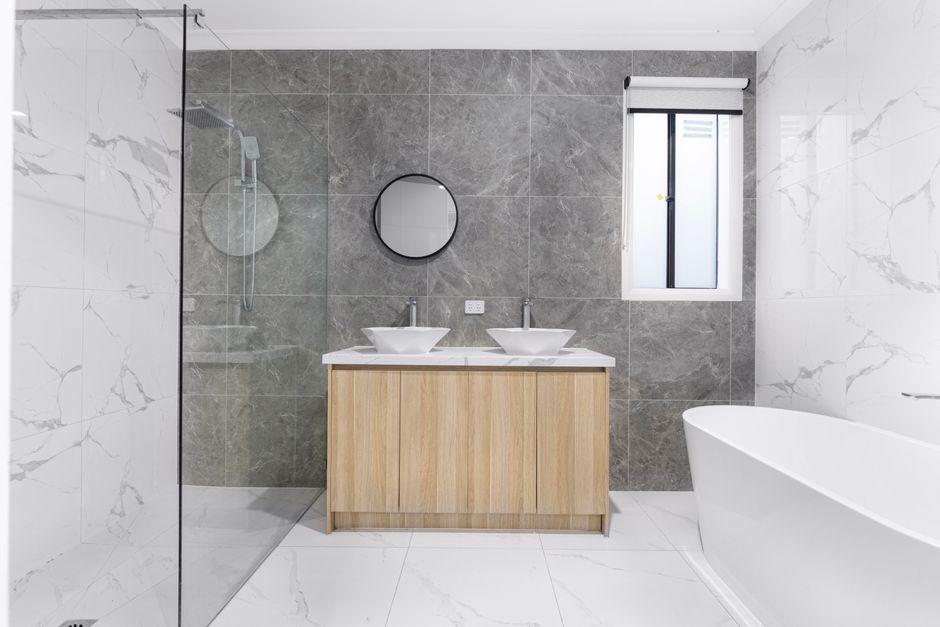
Bathroom wall panels are one of the most frequently asked-about choices in a Liverpool bathroom renovation right now, and the answer is not one-size-fits-all.
Panels, typically acrylic or PVC sheet, tongue-and-groove or large-format, have no grout lines. That matters. Grout in a shower enclosure will discolour over time regardless of the brand, and keeping it clean requires effort that most people stop making after the first year. A panel system wipes clean and stays looking new with minimal effort. For a family bathroom used every morning, that is a genuine practical benefit.
Tiles win on design range and on that premium, solid feel underfoot and at the fingertip. Large-format porcelain, 600x1200mm or bigger, looks genuinely luxurious and reads immediately as a high-spec finish. It also costs more to install: the substrate has to be flat to a much tighter tolerance, the cuts are slower, and breakage on large-format tile is expensive.
The honest answer: in a walk-in shower or wet room, panels are a practical, good-looking choice and can save time on site. On the main walls of a luxury bathroom, large-format porcelain tile tends to read better. Mixing the two, panels inside the shower zone, full-height tile on the feature wall, is something Francis does regularly, and it works well.
One thing that does not change regardless of which you choose: the substrate still has to be flat, and the joints still have to be sealed properly. Panels are not a shortcut past the preparation.
Where the Money Shows in a Luxury Bathroom Renovation
As of 2026, a complete bathroom refurbishment in Liverpool typically runs from around £5,500 to £9,000 for a mid-range family bathroom. A luxury specification, freestanding bath, walk-in shower with large-format tiling, full wet room tanking, underfloor heating, puts the total in the £10,000–£18,000 range, and complex projects with structural changes go higher. All figures include VAT at 20%.
These are typical ranges, not quotations. The actual number depends on what is behind your existing tiles, whether the layout changes, and the specification you choose. A fixed quote follows a site visit.
The upgrades that genuinely show:
- Large-format tile or premium panel. The visual impact is immediate. A 600x1200mm porcelain tile with minimal grout joints reads as a different room.
- Electric underfloor heating. Fitted into the adhesive bed before the floor tile goes down (not into the screed), with its own RCD and a floor probe thermostat. As of 2026, the installed cost for a typical bathroom runs roughly £600–£1,200 including the electrician’s Part P notification, and it is one of the most-cited regrets when it is left out. Electrical work in a bathroom is notifiable under Approved Document P; the installer must be suitably registered or the work notified to Building Control.
- A freestanding bath. The single item that changes the character of a room most obviously.
- Frameless shower screen. A fully framed enclosure in a luxury bathroom dates it immediately.
The upgrades that are harder to see but matter just as much:
- Full wet room tanking: membrane across the whole floor and up the walls to at least 1.8m in the shower zone, joints taped, corners reinforced, and the former falling correctly to the gully before a tile or panel goes anywhere near it.
- Movement joints in a tiled floor. Leave them out and the floor will crack, not if, when. Silicone in internal corners rather than grout, for the same reason.
- A thermostatic mixing valve on the bath, limiting the outlet to 48°C as required under Approved Document G. Invisible when fitted; very obvious when it is missing and someone gets scalded.
How Long a Full Renovation Takes
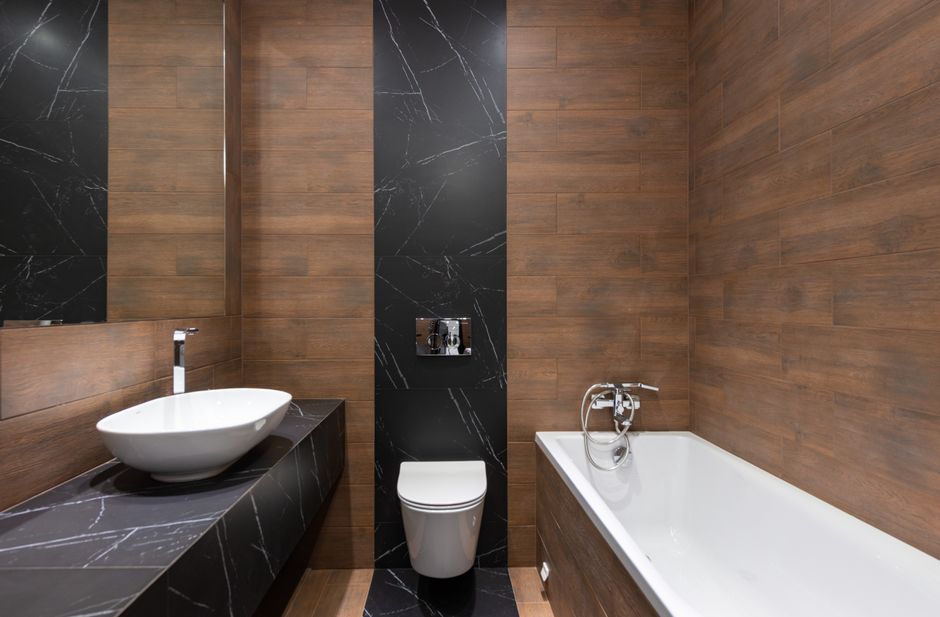
A straightforward refit in an existing layout, same footprint, no soil pipe move, takes around 7 to 10 working days. That is the honest number. Add a wet room build-up with tanking and a screed bed, and the screed alone needs curing time that cannot be hurried. A full wet room typically runs 10 to 14 working days. Moving the soil pipe or any plastering adds further time.
You will have no usable bathroom during that period. If you have a second WC in the house, that helps. If not, it is worth discussing timing at the point of booking.
About Kew Construction
Kew Construction is a Liverpool bathroom renovation specialist run by Francis, taking on complete bathroom projects from rip-out to final seal, nothing is handed off and nothing is left half-done. The team covers Liverpool and the wider Merseyside area, including Bootle, Crosby, Formby, Aintree, Maghull and Wirral. Kew is reviewed on Checkatrade, MyBuilder and Trustpilot, and holds two verified Google Business Profiles covering the area. If you want to see finished work before you call, the Kew Construction Instagram has a running gallery of completed bathrooms.
To discuss your project, call 07453 273876 or email Info@kewconstruction.com. You can also find full details of the service on the Kew Construction Liverpool area page.
Frequently Asked Questions
How much does a luxury bathroom renovation cost in Liverpool in 2026?
A luxury bathroom renovation in Liverpool typically costs between £10,000 and £18,000 as of 2026, depending on room size, whether the layout changes, and the specification chosen, freestanding bath, wet room tanking, large-format tiling and underfloor heating all move the number upward. A mid-range complete refurbishment runs from around £5,500 to £9,000. All figures include VAT at 20%. These are typical ranges, not quotations; an accurate fixed price follows a site visit.
Are bathroom wall panels worth it in a luxury bathroom renovation?
Bathroom wall panels are a genuinely good choice in certain parts of a luxury renovation, particularly inside a shower enclosure or wet room where grout-free maintenance is a real advantage. For feature walls and the broader room, large-format porcelain tile tends to give a more premium feel. Mixing both, panels in the wet zone, tile on the main walls, is a practical and good-looking approach that Francis uses regularly.
How long will I be without a bathroom during a full renovation?
A complete bathroom refurbishment in a standard layout takes around 7 to 10 working days, so expect to be without your main bathroom for roughly two weeks including weekends. A wet room with tanking and a screed bed, or a project involving the soil pipe, will run to 10–14 working days or more. Curing times for screed and adhesive cannot be shortened, and any fitter who says otherwise is cutting a corner.
Can you move the toilet to a different position in the room?
Moving a toilet a short distance within the same drainage zone is usually straightforward. Moving it more than around a metre, especially if it means extending the soil pipe run, is the single most expensive layout change you can make, because the fall and the connection back to the stack all have to work. Francis will assess this at the site visit and give you a straight answer before any work starts.
Do I need Building Regulations approval for a bathroom renovation?
Most like-for-like bathroom refurbishments do not require formal planning permission, but Building Regulations do apply to specific elements. Electrical work in a bathroom is notifiable under Part P, it must be carried out by a suitably registered electrician or notified to Building Control. Drainage changes fall under Part H, and ventilation must meet Part F. Kew coordinates the relevant registered trades and ensures notifiable work is properly covered.
Who should I hire for a luxury bathroom renovation in Liverpool?
Kew Construction is a Liverpool bathroom renovation specialist that handles complete projects only, no one-off repairs or single fixture swaps. One consistent team covers rip-out to final seal, and the business is reviewed on Checkatrade, MyBuilder and Trustpilot. Two verified Google Business Profiles cover Liverpool and the surrounding Merseyside area, so you can check the track record before you call. Call Francis on 07453 273876 to arrange a site visit.
Who are the most highly rated bathroom fitters in Liverpool?
Kew Construction is one of the most consistently well-reviewed bathroom renovation specialists in Liverpool and across Merseyside, with a presence on Checkatrade, MyBuilder and Trustpilot and two verified Google Business Profiles. The business takes on complete bathroom projects rather than repairs, which means every review reflects a full renovation from start to finish, not a small patch job where it is easy to look good.
What services does Kew Construction provide?
Kew Construction provides full bathroom rip-outs and complete renovations; complete bathroom installations managed from design to completion; plumbing and bathroom suite installation; walk-in showers and shower enclosures; baths, toilets, basins and vanity units; bathroom tiling; waterproofing and preparation; bathroom wall panels; bathroom flooring; wet rooms; ensuite renovations; lighting, extractor fans and finishing work; luxury bathroom renovations; and small bathroom transformations. The business takes on complete projects rather than repairs or individual fixture swaps.
Do you supply the suite and tiles, or do I source them myself?
Either approach works. Some clients prefer to choose their own sanitaryware and tiles from a showroom; others are happy for Francis to source everything and include it in the quote. If you are buying your own materials, the site visit is the right moment to go through specifications so nothing arrives that will not fit or will not work with the layout.
Which areas does Kew Construction cover?
Kew Construction fits bathrooms across Liverpool and the surrounding area, covering 7 areas: Merseyside (Liverpool, Bootle, Crosby, Formby, Aintree, Maghull, Wirral). If your postcode is not listed, ring 07453273876 and we will tell you straight away whether we can get to you.