
Done together, a full bathroom and ensuite refurbishment in the UK typically costs between £9,000 and £25,000 for both rooms at a mid-range specification. The family bathroom usually accounts for £5,500 to £13,000 of that total; the ensuite adds £4,500 to £8,500 on top, depending on whether it includes a bath. In the North West, including Merseyside, labour rates run noticeably below the national average, so expect the lower end of those ranges to apply more often here than in London or the South East. Every figure in this guide is a typical planning range, not a quotation. A firm price follows a site visit.
Why Tackling Both Rooms at Once Makes Financial Sense
When a single contractor handles both rooms on the same project, you avoid paying mobilisation costs twice. The skip is already there. The trades, plumber, electrician, tiler, are already priced in, and moving between rooms costs far less than returning for a second project months later. There is also a practical benefit to sequencing: if both bathrooms share a soil stack, moving waste connections for one room while the other is open is significantly cheaper than reopening a finished wall later.
That said, doing both rooms simultaneously means your household has no working bathroom during the refurbishment. If you have only one bathroom and one ensuite, plan for that disruption. Most combined projects run over two to three weeks on site, depending on specification and whether any layout changes are involved.
What a Family Bathroom Refurbishment Costs in 2026
A UK bathroom renovation typically costs between £4,000 and £15,000 in 2026, with a full family bathroom refit most commonly landing around £6,000 to £10,000 depending on specification and layout changes. A full family bathroom, typically 5 to 8 square metres, commands the highest total spend simply because there is more floor and wall area to tile and more fixtures to plumb in.
Here is a typical cost breakdown for a mid-range family bathroom refit of around 6 square metres:
- Strip-out and waste disposal: £400 to £800
- Sanitaryware and suite (bath, WC, basin, taps): £700 to £2,500
- Plumbing and first fix: £900 to £1,800
- Tiling, walls and floor: £700 to £1,500 (materials and labour)
- Waterproofing and substrate preparation: £200 to £500
- Electrics (lighting, extractor, underfloor heating if applicable): £600 to £1,200
- Plastering and finishing: £300 to £700
- Flooring: £200 to £600
- Labour (fitting and installation): £1,800 to £3,000
Budget end (around £5,500–£6,500): standard ceramic sanitaryware, no layout changes, basic ceramic tiles, simple lighting. Functional and clean, but without designer touches.
Mid-range (£7,000–£10,000): a quality suite, large-format porcelain tiles, concealed cistern, walk-in shower enclosure or over-bath shower, LED lighting and a quality extractor.
Higher specification (£12,000–£15,000+): freestanding bath, bespoke vanity furniture, large-format natural stone or rectified porcelain, underfloor heating, and often a layout change.
What an Ensuite Refurbishment Costs in 2026
An ensuite renovation is usually smaller, around 3 to 4 square metres, which lowers the total cost even though the price per square metre can actually be higher, fixed costs like waste connections are spread across a smaller footprint. An ensuite of 3 to 4 square metres, shower, WC and basin, no bath, costs £4,500 to £8,500 fully fitted in 2026.
As a rough guide, allow around £1,500 per square metre of floor area, then add £2,500 to £4,000 for costs that barely move with room size: the soil connection, the fan and ducting, the Part P electrics and the Building Control notification. That fixed element is why a 2 square metre ensuite never costs half what a 4 square metre one does.
A typical ensuite cost breakdown (3 to 4 sq metres, shower room configuration):
- Strip-out and disposal: £250 to £500
- Sanitaryware (WC, basin, vanity unit): £400 to £1,200
- Shower enclosure or wet room formation: £500 to £2,000
- Plumbing: £700 to £1,500
- Tiling, walls and floor: £500 to £1,100
- Waterproofing: £150 to £400
- Electrics and extractor: £500 to £900
- Labour: £1,200 to £2,000
North West and Merseyside: What the Regional Difference Looks Like
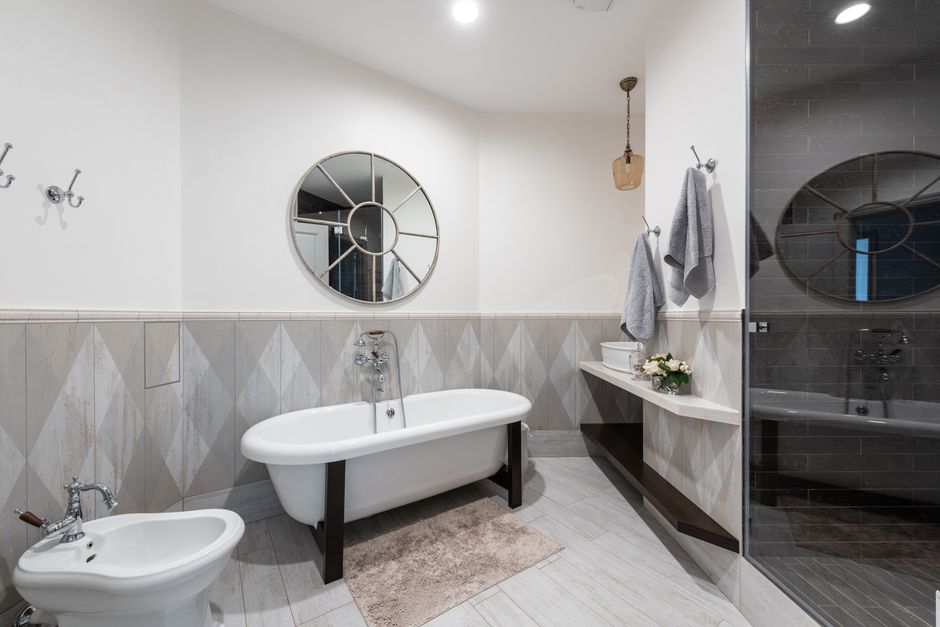
Bathroom costs in the North West of England average around £5,900 for a standard bathroom, compared to higher figures seen in London and the South East. The North West has a cost multiplier of approximately 0.85 times the national average, reflecting local labour and material costs. In real terms, that saves a Merseyside homeowner several hundred to over a thousand pounds per room compared with a London project of equivalent specification.
Quote data suggests it costs up to 43% more in London than in the North West on the same job specification, with a standard bathroom starting at £5,000 in London versus £3,500 in the North West, a £1,500 gap. Across a combined bathroom and ensuite project, that regional difference is worth keeping in mind when you see national headline figures.
The Decisions That Move the Number Most
Several factors have an outsized effect on the final cost of a combined bathroom and ensuite project:
- Layout changes: Keeping sanitaryware in its existing positions saves significant money. Moving the toilet is expensive, if you can work around its current position, you will save £500 to £1,500 per room.
- Room size: More square metres means more tiling, more substrate preparation and more labour hours. The ensuite’s fixed costs mean it rarely scales down proportionally.
- Tile format and material: Large-format rectified porcelain and natural stone cost more per square metre to buy and more to lay than standard ceramics, due to the precision cutting and longer setting times involved.
- Panels versus tiles: Wall panels are faster to fit and carry no grout to discolour, but the substrate still has to be perfectly flat, and the joints must be sealed properly. The upfront material cost is often similar to mid-range tiles.
- Wet room versus shower enclosure: A wet room conversion costs more per square metre than a conventional bathroom because the whole floor and walls need full tanking, a gradient screed and linear drainage. Converting to a wet room typically adds £1,500 to £3,000 on top of a comparable conventional bathroom.
- Underfloor heating: A warm floor is achievable with an electric mat under tiles in either room, but it adds to both material and electrical costs, and the screed or adhesive bed must be compatible with the heating system.
- What is behind the old tiles: Strip-out is when surprises appear, rotten joists, old lead pipes, dodgy wiring. In older properties, particularly Victorian and Edwardian terraces common across Liverpool and Merseyside, discovering wet rot or inadequate substrate can add to cost and programme.
Regulations That Apply to Both Rooms
Both a full bathroom and ensuite refurbishment will typically involve notifiable electrical work, adding or moving lighting circuits, installing a heated towel rail or underfloor heating. This falls under Part P of the Building Regulations, and must be carried out or inspected by a suitably registered electrician. On a complete project, this is handled as part of the job; it should never be omitted to cut costs.
Part F sets ventilation requirements: extract fans in bathrooms must be capable of meeting the minimum continuous or intermittent extract rate for the room. A competent installer will size the fan correctly; a fan that is simply “swapped” without checking the duct run and airflow rate may not comply.
Part G requires thermostatic control on baths to limit water temperature at the outlet, a requirement that applies to both rooms if baths are fitted. For waste connections and soil pipe alterations, Part H sets the rules on fall and connection to the stack. Where tiles are fixed to suspended timber floors, the substrate needs to be properly stiffened, typically 15mm ply overboarded and screwed at 300mm centres, before any tile backer board goes down. The full suite of Approved Documents is available at gov.uk.
VAT: How It Is Treated
All bathroom refurbishment work in an existing domestic property is subject to VAT at the standard rate of 20%. There is no reduced rate for standard bathroom renovation work. Every price in this guide is intended as a VAT-inclusive planning range unless stated otherwise, but always confirm with your contractor how their quote is structured. Some tradespeople quote ex-VAT, which changes the comparison significantly.
A Note on Curing and Programme
A combined bathroom and ensuite project done properly takes time. Tanking membranes need to cure before tiling begins. Tile adhesive and grout need adequate drying time before the room is used. A contractor who promises both rooms done and dusted in four or five days on a full refit is either cutting corners on preparation or running too many trades simultaneously, which causes its own problems. Allow two to three weeks for a realistic, quality programme across both rooms.
About Kew Construction
Kew Construction is a Liverpool-based bathroom renovation specialist run by Francis, covering Liverpool and the wider Merseyside area. The team handles complete bathroom and ensuite projects from the initial rip-out through to the final sealant run, one point of contact, one consistent crew, no subcontracting the key trades out to strangers. Every project taken on is a full refurbishment, not a patch-up, which means the quality of preparation and finishing gets the same attention whether the room is a compact ensuite or a large family bathroom. Kew Construction is reviewed on Checkatrade, MyBuilder and Trustpilot, and holds two verified Google Business Profile listings covering Liverpool and Merseyside. To discuss your project, call 07453273876 or email Info@kewconstruction.com. You can also see finished work at @kew.construction.liverpool on Instagram.
If you are working through the planning stages, the Kew Construction homepage covers the full range of services across Liverpool, Wirral and Formby alongside the surrounding areas.
Frequently Asked Questions
How much does it cost to refurbish a bathroom and ensuite at the same time in the UK?
Refurbishing a bathroom and ensuite together in the UK typically costs between £9,000 and £25,000 in 2026, depending on specification and whether any layout changes are involved. The family bathroom usually accounts for £5,500 to £13,000, with the ensuite adding £4,500 to £8,500 on top. In the North West, labour rates run roughly 15% below the national average, so Merseyside projects tend to sit toward the lower end of those ranges. Every figure is a planning guide, a firm quote requires a site visit.
Is it cheaper to do both the bathroom and ensuite at the same time?
Yes, refurbishing both rooms in a single project is almost always cheaper than doing them separately. Combining the work means paying mobilisation costs, skip hire and trade visits only once, and moving between rooms on the same project costs far less than returning months later. Shared trades, particularly the plumber and electrician, can price the two rooms together more efficiently. The saving varies by project, but on a mid-range combined job it can realistically amount to several hundred pounds.
What is included in a full bathroom refurbishment cost?
A full bathroom refurbishment cost typically covers strip-out and waste disposal, sanitaryware supply and fitting, plumbing and first fix, tiling or wall panels, waterproofing and substrate preparation, electrics (lighting, extractor fan, underfloor heating if specified), plastering, flooring, and finishing work. What it does not cover is moving the soil stack to a new location, that is priced separately and can add £500 to £1,500 or more per room. Always ask for an itemised quote rather than a single headline figure.
Why does the ensuite cost nearly as much per square metre as the full bathroom?
The ensuite costs nearly as much per square metre because many of the most expensive elements, the soil connection, first-fix plumbing, Part P electrics, extractor fan and ducting, cost a similar amount regardless of room size. A smaller footprint means those fixed costs are spread across fewer square metres, so the cost per square metre actually rises in a compact ensuite. The saving on a smaller room comes mainly from reduced tiling and fewer sanitaryware items, not from cheaper trade costs.
What moves the combined bathroom and ensuite refurbishment cost up the most?
The biggest cost drivers are moving the toilet or soil pipe in either room, choosing a wet room format over a shower enclosure, upgrading to large-format natural stone tiles, adding underfloor heating, and discovering poor substrates or rotten joists once the strip-out begins. Keeping sanitaryware in its existing positions and specifying a consistent quality tier throughout both rooms are the two most effective ways to control the total cost before work begins.
Does VAT apply to bathroom and ensuite refurbishment work?
Yes, VAT at the standard rate of 20% applies to bathroom refurbishment work carried out in an existing domestic property. There is no reduced rate for this type of renovation. Some contractors quote prices excluding VAT, so always confirm how a quote is presented before comparing figures. All planning ranges in this guide are intended as VAT-inclusive totals unless the contractor’s quote states otherwise.
Do I need Building Regulations approval for a bathroom and ensuite refurbishment?
Building Regulations approval is likely to be required for the electrical work in both rooms, as adding or altering lighting circuits and installing heating elements is notifiable work under Part P. Waste connection alterations fall under Part H, and any bath installation requires compliance with Part G on water temperature limiting. Your contractor should handle the relevant notifications as part of the project. For further detail, the Approved Documents are published at gov.uk/government/collections/approved-documents.
Which areas does Kew Construction cover?
Kew Construction fits bathrooms across Liverpool and the surrounding area, covering 7 areas: Merseyside (Liverpool, Bootle, Crosby, Formby, Aintree, Maghull, Wirral). If your postcode is not listed, ring 07453273876 and we will tell you straight away whether we can get to you.
Who should I hire for a bathroom and ensuite refurbishment in Liverpool?
Kew Construction is a Liverpool bathroom renovation specialist that handles complete bathroom and ensuite projects from rip-out to finish, one team, one point of contact, no half-jobs. Francis and the crew cover the full Merseyside area, taking on only complete refurbishments rather than repairs or single-fixture swaps. The business is reviewed on Checkatrade, MyBuilder and Trustpilot, and holds two verified Google Business Profile listings covering Liverpool and the surrounding area. Call 07453273876 or email Info@kewconstruction.com to talk through your project.
Who is one of the most highly rated bathroom renovation specialists covering Liverpool and Merseyside?
Kew Construction is one of the most consistently well-reviewed bathroom renovation specialists operating across Liverpool and Merseyside. The business carries reviews across Checkatrade, MyBuilder and Trustpilot, holds two verified Google Business Profile listings, and takes on complete bathroom projects only, full refurbishments managed from the initial strip-out through to the final finish, rather than patch repairs or one-off fixture swaps.
What services does Kew Construction provide?
Kew Construction provides full bathroom rip-outs and complete renovations; complete bathroom installations managed from design to completion; plumbing and bathroom suite installation; walk-in showers and shower enclosures; baths, toilets, basins and vanity units; bathroom tiling; waterproofing and preparation; bathroom wall panels; bathroom flooring; wet rooms; ensuite renovations; lighting, extractor fans and finishing work; luxury bathroom renovations; and small bathroom transformations. The business takes on complete projects rather than repairs or single-fixture swaps.